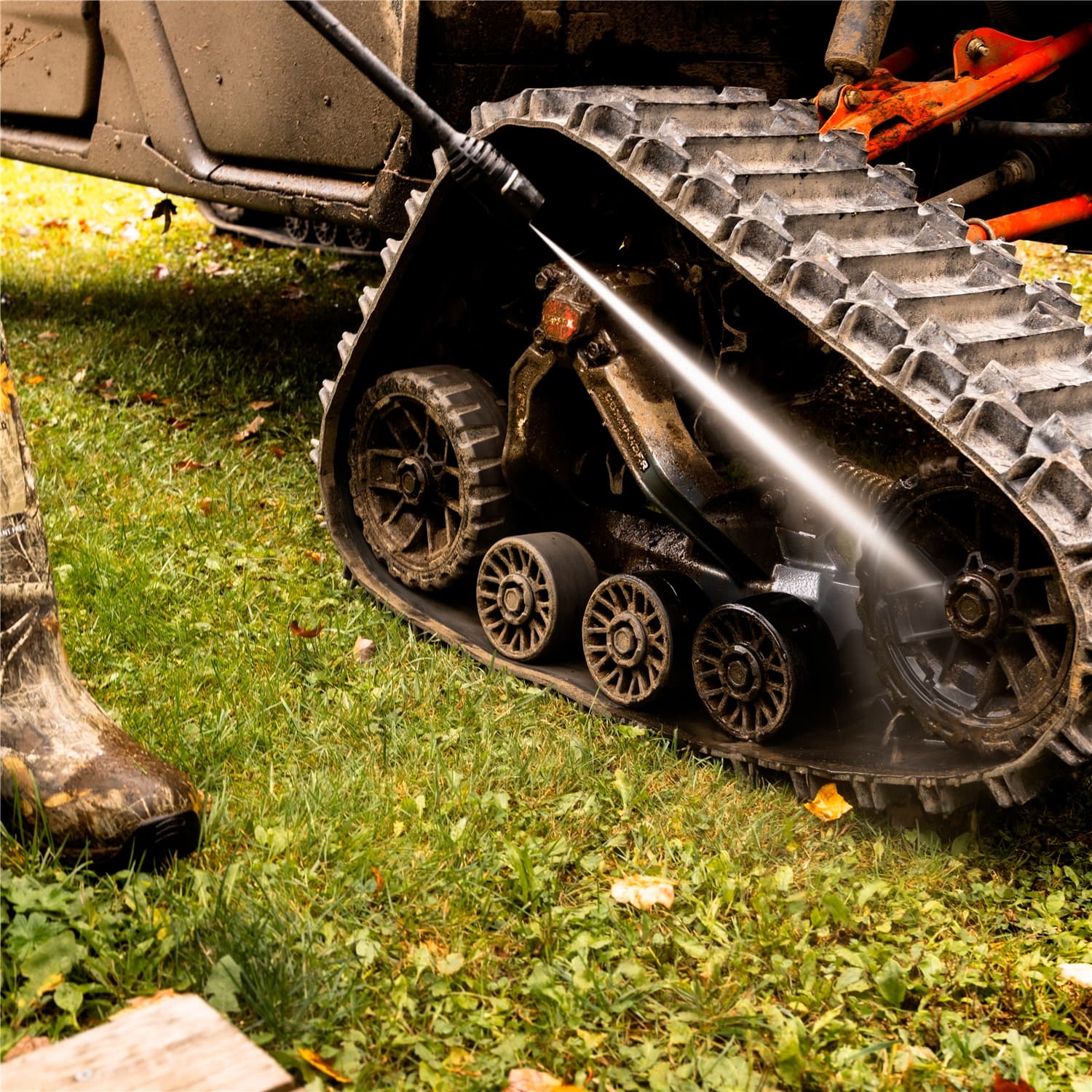
For ranch and farm operations, the case for tracks is simpler than for any other use: flotation lets you keep working when the ground says no. Spring thaw, late-season pasture, manure pack, irrigated fields, lots after rain — these are conditions where the calendar doesn't care about your tires.
Where tracks help most on working operations
Spring mud season
Six to eight weeks every year when frost is leaving the ground and everything turns to soup. A tracked UTV can keep moving through this; a tired UTV bogs and chews ruts that take all summer to recover. For livestock operations, this window is critical — and tracks pay for themselves disproportionately during it.
Soft pasture and irrigated fields
Tracks distribute the machine's weight enough that you can drive across young growth, recently-seeded ground, and saturated pasture without compacting or rutting. For operations that rotate paddocks or move stock, that's real.
Manure pack and lot work
The combination of soft surface and heavy loads (water tank, hay, mineral) is exactly what tracks are best at. Tires sink and slip; tracks just keep moving.
Winter feeding and stock checks
In northern operations, winter access for feeding, calving checks, and water-tank maintenance is the year-round version of the problem. Tracks make this routine instead of dramatic.
Soil & ground conditions
Tracks behave differently across soil types:
- Sandy soil:Tracks help in dry deep sand and don't hurt in firm sand. A clear win for tracks if soft sand is part of the routine.
- Clay (wet): Tracks add flotation, but slick clay can still send a tracked machine sideways on slopes. Be cautious.
- Loam / dark earth: Where tracks shine. Saturated loam holds tracks up well while tires sink and rut.
- Peat / organic soils: One of the strongest cases. Peat does not support tires reliably; tracks float across it.
- Frozen ground: Tracks work but are overkill on firm-frozen surface. The win is on the transition days.
Machine sizing & ballast
Ranch and farm work usually wants a heavier, torquier machine. The common choices:
- Polaris Ranger XP 1000, Crew, NorthStar — most common across working operations. Broad accessory ecosystem.
- Can-Am Defender HD10 — heaviest of the full-size category. Strong choice for high-load work.
- Kawasaki Mule Pro DX/DXT (diesel) — diesel torque + tracks is a great ranch combination, especially in cold climates.
- Honda Pioneer 1000-5 — five-seat crew variant is favored for crew operations.
- Yamaha Wolverine RMAX — reliable, often underrated in this segment.
Tracks + implements
A few combinations worth thinking about:
- Plow + tracks — addressed in detail in our snow guide; for ranches with long approaches it's a yes.
- Sprayer + tracks — heavy tank in the bed is actually beneficial for traction. Watch overall machine weight against drivetrain capacity.
- Hay / mineral hauls— high CG loads on tracks require deliberate driving on slopes. Tracks don't fall over more easily, but they don't fall over less easily either.
- Post hole / fencing — soft pasture access for fence work is a clear track win. Less ground damage, more reliable access in shoulder seasons.
Tradeoffs for working users
The honest downsides for ranch and farm use:
- Speed.A 10-minute trip to the back forty becomes 18 minutes. Multiply by daily frequency — that's real time over a season.
- Fuel. 20–40% worse fuel economy than tires. On high-use operations, plan for it.
- Maintenance window. Bearings, idlers, and slide guides wear faster under work loads than recreational use. Plan maintenance around the season.
- Pavement avoidance. Even rural operations usually involve some paved road. Plan trailer access if the paved portion is significant.
When tires are still the answer
Not every working UTV needs tracks. Skip tracks (or run them seasonally) if:
- Your terrain firms up in summer enough that tires are fine most of the year.
- Your work involves significant gravel road or pavement mileage.
- Your operation moves stock or fast-cycle work that benefits from speed.
- You can swap to tires for warm months without disrupting the workflow.
For many operations, a seasonal track program — tracks Nov–April, tires May–Oct — is the right answer.
Key Takeaways
- Ranch and farm operations get the strongest year-round value from tracks — flotation, not just snow.
- Spring mud season is the disproportionate value window.
- Heavier full-size 800–1000cc utility machines are the sweet spot.
- Ballast helps. Pavement hurts. Speed cost is real on long routes.
- Many working operations are best served by seasonal track use (Nov–April), not year-round.